How Green Steel is Produced Using Scrap Recycling and Clean Energy
The global steel industry is undergoing a major transformation as sustainability becomes a priority. Traditional steelmaking is one of the largest contributors to carbon emissions, but innovations like green steel production are changing the narrative. By combining scrap steel recycling and clean energy steel production, manufacturers are moving toward a more sustainable future.
What is Green Steel Production?
Green steel refers to steel produced with minimal environmental impact, particularly reduced carbon emissions. Unlike conventional methods that rely heavily on coal, sustainable steel manufacturing uses recycled materials and renewable energy sources to lower its carbon footprint.
The green steel process focuses on efficiency, circularity and cleaner technologies to produce high-quality steel without harming the environment.
Electric Arc Furnace (EAF) Process
At the core of green steel production is the electric arc furnace process. This method uses electricity to melt scrap steel instead of burning fossil fuels.
Key features of the EAF process:
- Uses recycled steel as primary raw material
- Requires significantly less energy than traditional blast furnaces
- Produces lower CO2 emissions
This makes it a cornerstone of eco-friendly steel manufacturing.
Use of Clean Energy in Steel Manufacturing
A major factor in clean energy steel production is the shift toward renewable power sources such as:
- Solar energy
- Wind energy
- Hydropower
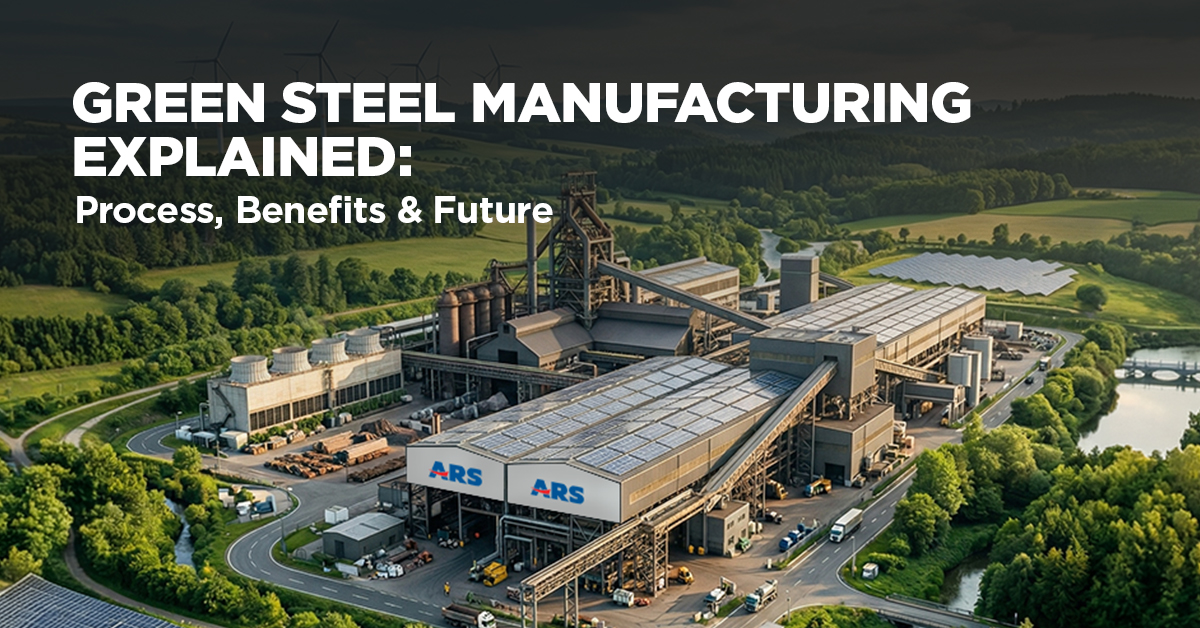
By integrating renewable energy in steel industry operations, manufacturers can drastically cut emissions and achieve low carbon steel production. When EAFs are powered by green electricity, the environmental benefits multiply.
Step-by-Step Green Steel Production Process
- Collection of Scrap Steel
Old steel products are gathered through industrial waste and recycling systems. - Sorting and Preparation
Materials are sorted to remove impurities and ensure quality input. - Melting in Electric Arc Furnace
The scrap is melted using the electric arc furnace process. - Refining and Alloying
Additional elements are added to achieve desired steel properties. - Casting and Shaping
Molten steel is cast into slabs, billets, or other forms. - Finishing
Final treatments enhance strength, durability, and usability.
This streamlined green steel process emphasizes efficiency and sustainability at every stage.
Environmental Benefits of Green Steel
The adoption of green steel production offers multiple environmental advantages:
- Significant reduction in CO₂ emissions
- Lower dependence on mining raw materials
- Reduced energy consumption
- Minimization of industrial waste
Additionally, recycled steel benefits include conserving natural resources and supporting a circular economy.
Green Steel vs Traditional Steel Production
| Aspect | Green Steel | Traditional Steel |
| Energy Source | Renewable energy | Coal and fossil fuels |
| Raw Material | Recycled scrap steel | Iron ore |
| Emissions | Low carbon | High carbon |
| Sustainability | High | Low |
This comparison highlights why low carbon steel production is gaining momentum worldwide.
Challenges in Green Steel Production
Despite its benefits, sustainable steel manufacturing faces several challenges:
- High initial investment costs
- Limited availability of renewable energy in some regions
- Dependence on quality scrap supply
- Technological barriers in scaling production
Overcoming these hurdles is essential for widespread adoption of the green steel process.
Applications of Green Steel
Green steel is increasingly used across industries, including:
- Construction and infrastructure
- Automotive manufacturing
- Renewable energy equipment (like wind turbines)
- Consumer goods
Its versatility ensures that eco-friendly steel manufacturing can meet modern industrial demands without compromising sustainability.
Future of Green Steel Production
The future of green steel production looks promising as governments and industries push for carbon neutrality. Advances in technology, increased investment in renewable energy in steel industry and stricter environmental regulations are expected to accelerate adoption.
Innovations like hydrogen-based steelmaking and smarter recycling systems will further enhance clean energy steel production.
Conclusion
The transition to green steel marks a crucial step towards a more sustainable industrial future. By leveraging scrap steel recycling, the electric arc furnace process and clean energy steel production, the steel industry can significantly reduce its environmental impact.
As technology evolves and awareness grows, sustainable steel manufacturing will likely become the global standard paving the way for cleaner, greener development across industries.