Categories
Uncategorized

What is TMT Sariya

What Is TMT Sariya? Features, Benefits, and Uses in Construction

When it comes to building strong and durable structures, TMT Sariya (also known as TMT steel bars) plays a crucial role. Whether you are planning a small home or a large commercial building, choosing the right reinforcement steel is essential for long-term safety.

TMT Sariya stands for Thermo-Mechanically Treated steel bars; a special type of reinforcement steel used in RCC (Reinforced Cement Concrete) structures. These bars go through a high-tech manufacturing process involving heating, quenching and tempering. The result is steel with a tough outer surface and a flexible inner core, ideal for modern construction needs.

TMT Sariya Features

High-quality TMT bars are preferred in India due to their advanced properties. The key TMT Sariya features include:

  1. High strength

TMT steel bars have high tensile strength, making them capable of withstanding heavy loads.

  1. Superior ductility

The inner core remains soft and flexible, helping the bars bend without breaking.

  1. Earthquake resistance

TMT bars absorb shocks and vibrations, making them suitable for seismic zones, including parts of South India.

  1. Corrosion resistance

Modern TMT bars have better resistance to rust, an essential factor in coastal regions like Tamil Nadu.

  1. Heat resistance

They can withstand high temperatures, providing added safety during fire-related incidents.

TMT Sariya Benefits

Using quality TMT bars comes with several advantages. Some major TMT Sariya benefits are:

  • Longer life of the structure

The strength and durability of TMT bars directly improve the lifespan of buildings.

  • Better bonding with concrete

The ribbed outer surface offers stronger grip with concrete, enhancing structural stability.

  • Cost efficiency

Though slightly expensive, TMT bars reduce steel consumption due to their high strength-to-weight ratio.

  • Safe for house construction

When planning TMT Sariya for house construction, homeowners prefer it because it ensures safety, durability and resistance to weather conditions.

Uses of TMT Sariya in Construction

TMT bars are versatile and widely used across multiple construction applications. Key TMT bar uses include:

  • Residential buildings (houses, villas)
  • Commercial structures (shops, office buildings)
  • Bridges and flyovers
  • Dams and irrigation structures
  • Industrial projects
  • High-rise buildings
  • Foundations, beams, columns, slabs and lintels

For any reinforced concrete work, TMT Sariya remains the backbone of strength and stability.

TMT Sariya for House Construction

In house construction, TMT Sariya is used in:

  • Footings and foundations
  • Plinth beams
  • Columns
  • Roof slabs
  • Staircases
  • Lintels and chajjas

Choosing reliable TMT steel bars ensures your home remains safe from natural calamities, corrosion and structural damage.

TMT Sariya Price in Tamil Nadu

The TMT Sariya price in Tamil Nadu varies depending on:

On average, prices range between ₹55 to ₹75 per kg, but buyers should always check the latest rates from trusted dealers.

Best TMT Sariya in South India

South India is home to several reputed TMT bar manufacturers. When choosing the best TMT Sariya in South India, look for:

  • BIS certification
  • High ductility grades (like Fe 550D or Fe 600)
  • Corrosion-resistant technology
  • Good dealer network and availability
  • Consistent quality and customer reviews

Selecting a reliable brand ensures strength, durability and long-term value.

Conclusion


TMT Sariya is an essential material in modern construction due to its unmatched strength, flexibility and durability. Whether you’re planning residential or commercial work, understanding what TMT Saria is, its features, benefits and applications help you make the right choice.

Investing in high-quality TMT steel bars ensures your structure stands strong for generations especially in regions like Tamil Nadu and across South India, where weather and seismic activity need better reinforcement.

Categories
Uncategorized

RCC Column Reinforcement

Types of Reinforcements Used in RCC Columns

Reinforced Cement Concrete (RCC) columns are among the most important structural elements in any building. They carry the load from beams and slabs and transfer it safely to the foundation. To achieve adequate strength, stability, and ductility, steel reinforcement is provided inside concrete. Understanding the types of reinforcements used in RCC columns helps ensure durable and safe construction.

Importance of Reinforcement in Column Performance

Columns are vertical compression members designed to support structural loads. While concrete is strong in compression, it is weak in tension—making steel reinforcement essential. Proper detailing and placement of reinforcement ensure structural safety and compliance with relevant codes such as IS 456, ACI, or Eurocode.

What Is Column Reinforcement?

Column reinforcement refers to the steel bars (rebars) placed inside concrete columns to improve their load-carrying capacity. These steel bars resist tensile, shear, and bending stresses that concrete alone cannot withstand.

Reinforcement in columns generally includes:

  • Longitudinal bars (vertical bars)
  • Ties / Lateral ties
  • Spiral reinforcement
  • Helical reinforcement
  • Additional bars (for lapping or confinement)

Purpose of Reinforcement in RCC Columns

Reinforcement in RCC columns serves several structural and safety functions:


  • Enhances tensile strength
  • Improves ductility, allowing the structure to deform safely during seismic events
  • Prevents buckling of the concrete core
  • Binds concrete together, improving confinement
  • Ensures load transfer even if concrete cracks
  • Increases durability and prevents sudden collapse


Types of Reinforcements Used in RCC Columns

Below are the main types of reinforcement in columns used in modern construction:


  1. Longitudinal Reinforcement (Vertical Bars)

These are the primary load-carrying steel bars placed vertically inside the column.

Functions:

  • Carry axial compression and tension loads
  • Resist bending (moments)
  • Enhance column rigidity

Common bar sizes: 12 mm, 16 mm, 20 mm, 25 mm, and 32 mm
Bar types: TMT bars (Fe 415, Fe 500, Fe 550)

  1. Lateral Ties (Closed Stirrups)

Lateral ties are small-diameter bars placed perpendicular to longitudinal bars.

Functions:

  • Prevent the buckling of vertical bars
  • Hold longitudinal bars in position
  • Improve ductility and confinement

Commonly used: 6 mm, 8 mm, or 10 mm ties.

  1. Spiral or Helical Reinforcement

Used mainly in circular or specially designed columns.

Advantages:

  • Provides superior confinement
  • Enhances load-carrying capacity
  • Offers better seismic resistance

Widely used in bridge piers and earthquake-prone structures.

  1. Transverse Reinforcement

Includes ties, hoops, and helical bars. They resist shear and confinement forces.

  1. Additional or Extra Bars

Used for:

  • Lapping (splicing)
  • Column enlargement
  • Construction joints
  • Increased load demands

Minimum and Maximum Reinforcement in Columns

Minimum Reinforcement


As per IS 456:

  • The minimum longitudinal reinforcement = 0.8% of the gross cross-sectional area of the column
  • Minimum number of bars:
    • 4 bars for rectangular columns
    • 6 bars for circular columns

Maximum Reinforcement


  • Maximum reinforcement should not exceed 6% of the cross-sectional area
  • Practically kept between 2%–4% to ensure proper compaction

Spacing Requirements

  • Lateral ties spacing:
    • Least of:
      • 300 mm
      • 16 × dia. of longitudinal bar
      • 48 × dia. of tie bar

Detailing and Placement of Reinforcement in Columns

Proper detailing is crucial for structural performance.

Key guidelines:

  • Maintain clear cover as per code (usually 40–50 mm for columns)
  • Ensure longitudinal bars are placed symmetrically
  • Provide closer ties near beam-column joints
  • Use mechanical couplers when space is limited
  • Ensure ties are properly anchored with 135° hooks
  • Avoid congestion; allow space for concrete flow

Correct detailing helps prevent failures during earthquakes, overloading, or long-term service.

Common Mistakes to Avoid During Column Reinforcement

  1. Insufficient cover, leading to corrosion of steel
  2. Improper spacing of ties, causing bar buckling
  3. Poor lapping practices, affecting load transfer
  4. Overcrowded reinforcement, restricting concrete compaction
  5. Incorrect tie anchorage (less than 135° hooks)
  6. Misalignment of bars
  7. Using rusted or low-quality reinforcement bars

These errors can significantly reduce the column’s structural performance.

Conclusion


RCC columns play a critical role in maintaining the strength and stability of buildings. Using the right types of reinforcements, ensuring proper detailing, and following code guidelines are essential for safe and durable construction. Longitudinal bars, lateral ties, and helical reinforcement each contribute uniquely to the column’s strength and ductility.

When planned and executed correctly, column reinforcement ensures that a structure remains strong, resilient, and safe throughout its lifespan.

Categories
Uncategorized

Good TMT Bar Qualities

Top 10 Qualities of a Good TMT Bar: A Complete Guide for Builders & Homeowners

When it comes to building a strong, safe, and long-lasting structure, choosing the right TMT bar is one of the most important decisions. Whether you are constructing a home, commercial building, or infrastructure project, the quality of the TMT steel bar you use directly affects strength, durability, and safety.

In this blog, we will explain what TMT bars are, why their quality matters, the top 10 qualities of a good TMT bar, how to identify a genuine one, and how to choose the right TMT grade such as Fe415, Fe500, Fe550, and Fe600.

What are TMT Bars?

TMT bars, or Thermo-Mechanically Treated bars, are high-strength reinforcement steels used in RCC construction. Their unique manufacturing process—rapid cooling followed by heat treatment makes them more flexible, durable, and fire-resistant than conventional steel bars.

They are widely used in:


  • Residential buildings
  • Commercial complexes
  • Bridges & flyovers
  • Dams & industrial structures

Why Quality Matters in TMT Bars

Every structure needs a strong backbone, and the TMT steel bar serves exactly that purpose.
Using low-quality steel can lead to:

  • Weak structural strength
  • Early corrosion
  • Higher maintenance costs
  • Risk of collapse

This is why builders and engineers always look for the best TMT bar that offers superior strength, flexibility, and corrosion protection.

Top 10 Qualities of a Good TMT Bar

Here are the top TMT bar qualities that define a reliable and high-performance steel bar:


  1. High Tensile Strength

       The primary purpose of a TMT bar is to provide strength to the structure. High tensile strength ensures resistance against heavy loads and natural forces.

  1. Excellent Flexibility

      A good TMT bar bends without breaking. This flexibility helps the structure withstand earthquakes.

  1. Superior Ductility

      Higher ductility allows the bar to stretch under stress, improving building safety during disasters.

  1. Corrosion Resistance

        A corrosion resistance TMT bar lasts longer, especially in coastal or humid regions.

  1. Earthquake Resistance

        Elasticity and ductility make the bar ideal for seismic zones.

  1. Fire Resistance

        Quality TMT bars can withstand high temperatures up to 600°C.

  1. Uniform Rib Pattern

        Ribs improve the bonding between steel and concrete, increasing overall stability.

  1. Weldability

      Bars with controlled carbon content allow easy welding without compromising strength.

  1. Fatigue Resistance

       This ensures durability even under repeated loading, such as in bridges and industrial structures.

  1. Quality Certification

      The best quality TMT bars in India follow BIS standards (IS 1786:2008) and other certifications.

How to Identify a Good Quality TMT Bar

Here’s how you can spot a reliable TMT steel bar:


  • Check for BIS certification
  • Examine the rib pattern (should be uniform)
  • Look for brand embossing
  • Ensure the bar has a clean finish
  • Verify grade such as Fe500 or Fe550
  • Perform a bend test (it shouldn’t crack)

Common Grades of TMT Bars (Fe415, Fe500, Fe550, Fe600)

Each TMT grade has a specific use:


Fe415

  • Best for small residential buildings
  • Good ductility

Fe500

  • Widely used grade
  • Perfect balance of strength and flexibility

Fe550

  • Higher strength
  • Ideal for commercial & industrial projects
  • Often compared as Fe500 vs Fe550 TMT bar for heavy-duty needs

Fe600

  • Extremely high strength
  • Suitable for mega infrastructure projects

Understanding the types of TMT bars helps you choose based on your project’s structural requirements.

Choosing the Right TMT Bar for Your Project

You should choose TMT bars depending on:


  • Type of structure
  • Load-bearing requirements
  • Environmental conditions
  • Budget and brand reputation

For most building needs, Fe500 and Fe550 grades are considered the best TMT bars due to their high strength and durability.

Conclusion


Selecting the right TMT steel bar is essential to ensure your building stands strong for decades. The features of TMT bars such as corrosion resistance, flexibility, strength, and fire safety play a major role in determining structural durability. By understanding the top 10 qualities of a good TMT bar and choosing the right grade, you can ensure a safe, long-lasting, and cost-effective construction.

Categories
Uncategorized

Rising Steel Imports in India

Rising Steel Imports: Implications for India’s Industry and the Role of ARS Green Steel

India’s steel sector is undergoing a transformative phase, driven by growing consumption in infrastructure, renewable energy, engineering goods, and automobiles. However, this growth trajectory is increasingly challenged by the surge in low-cost steel imports primarily from China and other Asian markets which is reshaping the competitive landscape for domestic producers.

The Changing Import Landscape

In recent years, global overcapacity particularly in China has led to steel entering international markets at prices significantly lower than fair value. This influx of cheap steel has placed considerable pressure on Indian producers, disrupting pricing structures and challenging domestic capacity utilization.

For India, which continues to expand its infrastructure and manufacturing capabilities, the widening gap between domestic production costs and imported material has become a matter of strategic and economic concern.

Impact on Domestic Producers

  1. Price Undercutting and Margin Pressure

Domestic steelmakers are finding it difficult to compete with import prices. This affects not only large integrated producers but also the numerous secondary mills and rolling units that form the backbone of India’s steel ecosystem.

  1. Supply Chain Imbalance

Imports of flat steel products widely used in the automotive, appliance, and engineering sectors have captured increasing market share, often displacing material manufactured locally. This not only impacts producers but also weakens India’s larger industrial value chain.

  1. Slowdown in Investments

The uncertainty created by fluctuating import volumes and inconsistent pricing has led to a cautious investment climate. Many producers are holding back on modernization, green technology upgrades, and capacity expansion.

Implications for MSMEs and Downstream Industries

While low-cost imports may initially appear beneficial to MSMEs seeking affordable raw material, long-term reliance introduces new risks:

  • Supply-chain vulnerability due to geopolitical or logistical disruptions
  • Inconsistent quality when compared to BIS-certified domestic products
  • Market instability caused by sudden price shifts driven by foreign exporters

For companies like ARS Green Steel that work closely with MSMEs, stable and responsible sourcing is essential to maintaining competitiveness and supporting consistent manufacturing output.

Government Measures and Industry Response

Recognizing the challenges posed by steel dumping, the Indian government has been evaluating:

  • Safeguard duties and temporary tariffs
  • Anti-dumping investigations
  • Stricter quality control measures
  • Incentives to strengthen domestic capacity in critical steel categories

These measures aim to ensure a fair and equitable marketplace while protecting India’s long-term industrial ambitions.

How ARS Green Steel Is Strengthening the Future of Indian Steel

As a company committed to sustainable and future-ready steelmaking, ARS Green Steel believes it is important to highlight how these import trends are affecting the industry and the broader value chain, while also advocating for solutions that foster long-term resilience and responsible growth.

As a company built on innovation, sustainability, and responsible manufacturing, ARS Green Steel is committed to supporting India’s industrial growth through:

 Green Steel Technologies


Our production processes prioritize reduced carbon emissions, circular material usage, and energy efficiency ensuring that Indian industry has access to environmentally responsible steel without compromising on quality.

High-Quality Domestic Supply


ARS Green Steel focuses on delivering reliable, BIS-compliant products that eliminate the quality uncertainties associated with low-cost imports.

Support for MSMEs


We work closely with downstream industries to provide stable pricing, customized grades, and consistent supply helping MSMEs remain competitive in both domestic and global markets.

Long-Term Capacity Building


Even in a challenging market environment, ARS continues to invest in advanced technology, capacity enhancement, and green transformation showing our commitment to India’s self-reliant manufacturing future.

Conclusion


To conclude, the rise in steel imports presents both challenges and opportunities for India’s steel industry. While short-term measures can address price distortions, the long-term strength of the sector depends on innovation, sustainability, and domestic value creation.

At ARS Green Steel, we believe the path forward lies in building a steel ecosystem that is not only competitive but environmentally responsible and supply-chain secure. By investing in green technologies, supporting Indian manufacturers, and ensuring consistent product quality, we are helping shape a resilient future for the industry and for the nation.

Categories
Uncategorized

Why TMT Bars Are the Backbone of Modern Structural Engineering

Why TMT Bars are the Backbone of Modern Structural Engineering

When it comes to building strong and resilient structures, the role of materials cannot be overstated. Among the most critical materials in modern construction, TMT steel bars (Thermo-Mechanically Treated steel bars) stand out as the foundation of many structural designs. Their unique properties make them indispensable in ensuring durability, strength, and safety in construction projects.

The Importance of TMT Bars in Structural Engineering

TMT bars have become a cornerstone in structural engineering due to their superior strength and flexibility. These bars are produced using a specialized process that combines high heat and rapid cooling, giving them a unique set of characteristics that make them ideal for use in reinforced concrete.

One of the primary reasons TMT bars are so widely used is because of their exceptional strength and durability. The process of thermomechanical treatment results in a tough outer surface with a soft inner core. This combination allows the bars to withstand immense pressure and stress without cracking or breaking. Whether it’s high-rise buildings, bridges, or industrial structures, TMT steel in modern construction ensures that the foundation is solid and long-lasting.

Benefits of TMT Bars in Construction

  1. High Strength-to-Weight Ratio: TMT bars provide excellent tensile strength, which makes them ideal for areas where high loads are expected. They offer a much stronger and lighter alternative compared to traditional steel bars.
  2. Corrosion Resistance: One of the standout qualities of CRS TMT –
  3. Earthquake Resistance: Ductility of TMT impact earthquake resistance are known for their ability to withstand seismic forces, making them crucial in earthquake-prone areas. The flexibility of TMT bars helps absorb the shock and prevent catastrophic failures during tremors.
  4. Enhanced Durability: Corrosion Resistance Properties enhance to life of building and structures. With their ability to resist wear and tear, TMT steel bars increase the longevity of the structures they are used in, offering long-term value for construction projects.

Best TMT Bars for Construction: ARS Steel and ARS TMT Bars

When choosing TMT bars for construction, quality is key. One of the top names in the industry is ARS Steel, known for its ARS TMT bars. These bars are engineered to meet the highest standards of strength, durability, and reliability. The process of manufacturing ARS TMT bars involves cutting-edge technology and strict quality controls, ensuring they deliver superior performance under all conditions.

By choosing the best TMT bars for construction, like those from ARS Steel, builders and engineers can be confident that they are using the most reliable material for structural reinforcement.

Conclusion


In conclusion, TMT bars have revolutionized modern construction by providing enhanced strength, durability, and flexibility. Whether it’s for skyscrapers, bridges, or industrial buildings, TMT bars, especially those from trusted brands like ARS Steel, form the backbone of structural engineering, ensuring that structures stand the test of time and the forces of nature. The benefits of TMT bars are clear: they offer unmatched strength, resistance to corrosion, and the ability to withstand seismic forces. It’s no wonder that they are the material of choice for engineers and builders around the world.

Categories
Uncategorized

RCC Column Footing: Types, Uses, and Importance in Construction

What is RCC Column Footing? Types, Uses, and Importance Explained

When it comes to constructing durable and stable buildings, every detail in the foundation plays a crucial role. One of the most essential components of any structure is the RCC column footing. Understanding what it is, its types, and its importance can help ensure that your construction project is grounded on a solid and reliable base.

What is RCC Footing?

RCC footing (Reinforced Cement Concrete footing) is a critical structural element designed to distribute the load from the columns of a building onto the soil. This footing provides stability to the structure by transferring the weight of the columns evenly to the ground, preventing settling or tilting. RCC footings are made by mixing concrete with steel reinforcement (usually TMT steel bars), offering a combination of strength and flexibility to bear the load and environmental stress.

Types of RCC Column Footing

There are several types of RCC column footing, and the choice depends on the soil conditions, the weight of the structure, and the type of building being constructed.

Here are the most commonly used types:

  1. Slab Type Footing: This is the simplest type where a concrete slab is laid under the column to distribute the load. It’s usually used for lighter structures.
  2. Slab and Beam Footing: In this type, a slab is used along with beams to better distribute the weight of the column. It’s commonly used for medium-sized buildings.
  3. Slab and Strap Footing: This design is often used for closely spaced columns where the load needs to be distributed over a wider area, making it ideal for large buildings and heavy structures.
  4. Isolated Footing: An isolated footing is used for single columns and is usually square or rectangular in shape. It’s the most common type used for individual columns in residential buildings.
  5. Combined Footing: This type is used when two or more columns are placed close to each other. The footing combines the area under all columns, distributing the load evenly.

Importance of RCC Column Footing

  1. Load Distribution: The primary function of an RCC column footing is to distribute the load from the column over a large surface area, preventing excessive pressure on the soil underneath, which could lead to foundation settlement or structural failure.
  2. Stability: RCC footings are designed to provide stability to the building structure, ensuring that the columns remain firmly in place even under heavy load or seismic stress.
  3. Prevention of Settlement: A well-constructed RCC footing prevents uneven settlement of the foundation, which can lead to cracks in walls or uneven floors.
  4. Corrosion Resistance: Footings made using corrosion-resistant steel, like ARS 550D bar, are designed to last longer and perform better under harsh environmental conditions, particularly in regions prone to high humidity or moisture.

Steps for Installing RCC Footings

  1. Site Preparation: Clear the area and excavate the ground to the required depth based on soil conditions and structural requirements.
  2. Formwork: Set up the formwork to shape the footing, ensuring the dimensions are accurate for the type of footing being constructed.
  3. Reinforcement: Place the TMT steel bars or ARS 550D bar as reinforcement inside the formwork. These bars help in bearing tensile forces and provide additional strength to the concrete.
  4. Concrete Pouring: Once the reinforcement is in place, pour the concrete into the formwork. The concrete should be mixed correctly to ensure the right strength and durability.
  5. Curing: After the concrete is poured, it should be cured properly for several days to ensure it hardens fully and gains strength.

Tips for RCC Footing

  1. Choose Quality Materials: Always use high-quality TMT steel bars like ARS 550D bar, which offer superior strength and corrosion resistance, ensuring the durability of the footing.
  2. Proper Soil Testing: Before designing the footing, conduct a thorough soil investigation to understand the load-bearing capacity and make necessary adjustments to the size and type of footing.
  3. Correct Mix Design: Ensure the concrete mix is designed according to the project requirements, considering factors like strength, weather conditions, and the expected load.
  4. Seismic Consideration: For buildings in earthquake-prone regions, it’s essential to use reinforcement that can resist lateral forces. Corrosion-resistant steel enhances the longevity and reliability of the structure in such environments.

Conclusion


In conclusion, RCC column footing plays a pivotal role in ensuring the stability, durability, and safety of a building. By using quality materials like TMT steel bars and ARS 550D bar, along with a precise construction process, the foundation remains strong and resilient. Whether you’re working with a small residential building or a large commercial structure, understanding the types and importance of RCC footings will go a long way in ensuring the integrity of your project. Proper installation and care can make all the difference in a foundation that stands the test of time.

Categories
Uncategorized

Earthquake-Resistant TMT Bars: Strength and Safety for Structures

How Earthquake-Resistant TMT Bars Can Save Lives

In earthquake-prone regions, the safety of buildings and infrastructure is a top priority. One of the most effective ways to enhance the earthquake resistance of structures is by using high-quality TMT (Thermo-Mechanically Treated) bars. These specially designed bars are critical for reinforcing concrete, ensuring that buildings remain strong and stable during seismic events. In this blog, we’ll explore how earthquake-resistant TMT bars work, why they’re essential for earthquake safety, and how choosing the best TMT bars for earthquake zones can save lives.

What is Earthquake-Resistant TMT Bars?

TMT bars are steel reinforcement bars used in the construction of concrete structures. The “earthquake-resistant” properties come from the bars’ ability to withstand the dynamic forces generated during an earthquake. These bars are designed with a unique combination of tensile strength, ductility, and corrosion resistance, all of which contribute to a building’s ability to absorb and dissipate seismic energy.

Earthquake-resistant TMT bars like ARS TMT bars are produced using a controlled process that involves high-temperature treatment, followed by rapid cooling. This process gives the bars their impressive strength and flexibility, allowing them to bend without breaking. This characteristic is essential in earthquake zones where buildings must move with the ground rather than resist it completely.

Why Use TMT Bars for Earthquake Resistance?

During an earthquake, the ground shakes violently, and buildings are subjected to horizontal forces that can cause structural damage or even collapse. The ability of a building to survive these forces largely depends on the quality of the materials used in construction. Ordinary reinforcement bars may be too brittle, leading to cracking and eventual failure during seismic activity.

TMT bars for earthquake resistance are designed to counteract these forces by offering superior tensile strength, elasticity, and impact resistance. The outer core of these bars is hardened, giving them high strength, while the inner core remains ductile, providing flexibility. This unique combination of properties allows the bars to absorb seismic energy, reducing the risk of structural damage and keeping buildings standing even under extreme conditions.

How Earthquake-Resistant TMT Bars Protect Buildings

  1. Flexibility and Ductility: During an earthquake, buildings need to flex and absorb shocks without breaking. TMT bars with high ductility can bend under stress, allowing the structure to deform slightly while maintaining its integrity. This reduces the risk of cracks and prevents catastrophic failure.
  2. High Tensile Strength: The hardened outer core of TMT bars provides excellent tensile strength, enabling them to withstand the enormous pulling forces that occur during an earthquake. This ensures that the building can hold together under pressure, preventing complete collapse.
  3. Superior Impact Resistance: Earthquakes generate powerful vibrations that can cause significant damage to a structure. Earthquake-resistant TMT bars are designed to resist these vibrations and impact forces, enhancing the overall stability of the building.
  4. Corrosion Resistance: TMT bars are resistant to corrosion, which ensures that they remain strong over time. In earthquake zones, where buildings are often exposed to moisture, this resistance is vital for maintaining structural integrity.

Fe 500D vs Fe 550D for Earthquake Safety

When choosing TMT bars for earthquake resistance, two commonly used grades are Fe 500D and Fe 550D. These grades differ primarily in their tensile strength, which plays a key role in determining their effectiveness during seismic events.

  • Fe 500D TMT Bars: Fe 500D bars have a tensile strength of 500 MPa and are known for their excellent balance of strength and ductility. These bars are ideal for most earthquake-prone areas, as they can withstand significant seismic forces while offering enough flexibility to prevent catastrophic failure.
  • Fe 550D TMT Bars: With a higher tensile strength of 550 MPa, Fe 550D TMT bars offer even greater strength, making them suitable for high-risk earthquake zones. However, the increased strength can sometimes result in reduced ductility, meaning that the bars may not bend as much as Fe 500D in the face of extreme seismic stress. For buildings that need extra strength, Fe 550D bars can offer additional protection, but careful consideration of the building’s design is required.

Both grades are excellent choices, but Fe 500D bars tend to strike a better balance between strength and flexibility, making them ideal for most earthquake-resistant applications.

The Role of ARS TMT Bars in Earthquake Resistance

One of the top choices for earthquake-resistant construction is ARS TMT bars. Known for their high quality and superior performance, ARS TMT bars are engineered specifically to withstand the forces generated by earthquakes. These bars are available in both Fe 500D and Fe 550D grades, allowing builders to choose the best option depending on the seismic risk of the area.

ARS TMT bars are produced using advanced technology that ensures consistent quality and performance. With their exceptional strength, ductility, and corrosion resistance, they offer enhanced earthquake resistance, ensuring that buildings constructed with ARS TMT bars are more likely to survive seismic events without significant damage.

Why Quality Matters in Earthquake Zones

The best TMT bars for earthquake zones are those that offer a combination of high tensile strength, flexibility, and resistance to environmental factors like corrosion. When choosing TMT bars for construction in seismic regions, it’s important to prioritize quality over cost. Substandard bars may not provide the necessary strength and flexibility, leaving buildings vulnerable to collapse during an earthquake.

In regions with high seismic activity, investing in high-quality earthquake-resistant TMT bars is an investment in safety. Not only do these bars enhance the structural integrity of buildings, but they also protect lives by ensuring that buildings remain standing and functional after a quake.

Conclusion


In earthquake-prone regions, TMT bars for earthquake resistance play a crucial role in safeguarding both buildings and lives. By offering superior strength, flexibility, and resistance to corrosion, earthquake-resistant TMT bars like ARS TMT bars ensure that structures can withstand seismic forces without catastrophic failure. Whether opting for Fe 500D or Fe 550D bars, choosing the right reinforcement material is essential for creating safe, resilient buildings in earthquake zones.

Remember, when it comes to earthquake safety, choosing the best TMT bars for earthquake zones isn’t just a matter of structural engineering it’s a matter of protecting the people who live and work in those buildings.

Categories
Uncategorized

TMT BAR BUYING GUIDE

 Grades, Sizes, Prices, and Brands

If you’re building a home, commercial space or an infrastructure, the strength of your construction depends on only one major thing which is TMT bars. They’re the skeletal framework of any structure and choosing the right one makes all the difference in durability, safety and cost-effectiveness.

What are TMT Bars and why are they important?

TMT stands for thermo-mechanically treated. These bars go through a manufacturing process that gives them a rough outer surface and a softer inner surface or core. This combination very unique and allows the bars to be both strong and flexible, making them ideal for earthquake-prone and high load areas.

TMT bars are essential in providing structural integrity, whether you’re laying a foundation, erecting pillars, or reinforcing concrete slabs.

 Understanding TMT Bar Grades

TMT bars come in different grades, which represent their strength in simple terms, how much stress a bar can withstand before permanently bending.

ARS Steel manufactures all major grades Fe 550 & Fe 600 using advanced technology. Each bar undergoes rigorous testing to meet and exceed standards, ensuring long-term performance and safety.

Choosing the TMT as per Structural Requirements

TMT bars come in various diameters depending on their application. Smaller bars like 6mm and 8mm are usually used for stirrups or lightweight structures. Medium sizes like 10mm, 12mm, and 16mm are common in slabs, beams, and columns. For large-scale structural elements and foundations, 20mm, 25mm, and 32mm bars are used.

ARS TMT bars are available in all standard sizes, making them versatile enough for both small-scale residential work and massive infrastructure projects.

What about pricing?

TMT bar prices fluctuate based on global steel rates, local demand, size, and grade.

  • Uncompromising quality: ARS uses the latest German technology to ensure uniform strength, flexibility, and corrosion resistance in every bar.
  • Earthquake resistant: ARS TMT bars have high ductility, which means they can absorb shock without cracking ideal for seismic zones.
  • Superior bonding with concrete: A unique rib pattern ensures better grip, reducing the chance of slippage under stress.
  • Corrosion resistant: Perfect for High TDS Content in water, coastal regions and humid environments where moisture is a concern.
  • Eco-friendly manufacturing: ARS Steel focuses on sustainability by using energy-efficient processes and recycled materials.

Builders, architects, and engineers across South India vouch for ARS Steel as a reliable and long-term construction partner.

Final thoughts

Your building deserves the best foundation, it begins with choosing the right TMT bars. From top-grade strength to proven durability, ARS steel TMT bars offer everything you need for a safe and long-lasting construction.

Make sure you’re reinforcing it with ARS Steel trusted by professionals, made for the future.


Categories
Uncategorized

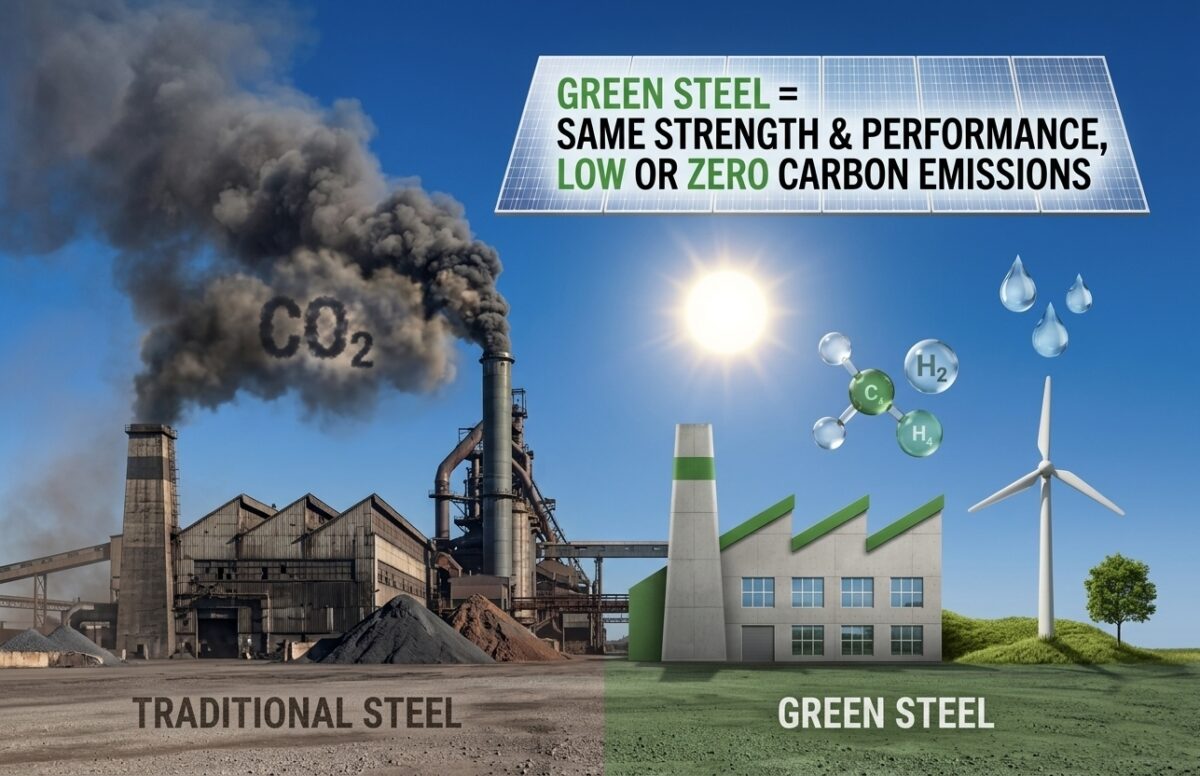
Green Steel vs Traditional Steel

Green Steel vs Traditional Steel: Environmental Impact Compared

Steelmaking is crucial for the nation’s growth, for industries like manufacturing, construction etc. However, traditional steelmaking has a massive carbon footprint, with coal processes accounting for significant global emissions. To combat these green steels are on the rise as they produce using cleaner methods like hydrogen and renewable energy. With this, steel production is becoming more sustainable. Now, let’s discuss the differences between both.

Traditional Steelmaking: The Carbon Heavyweight

Traditional steel is made using a blast furnace process where iron ore is mixed with coal to produce molten iron. This method is energy- intensive and responsible for 7-9% of global co2 emissions, making it one of the biggest industrial pollutants in the world.

Green Steel: The Sustainable Solution

Green steel reduces carbon emissions by using hydrogen instead of iron ore which produces water vapor instead of co2. This process uses electric arc furnaces powered by renewable energy, making it significantly cleaner and more efficient. It can cut carbon emissions by up to 90% compared to traditional methods and offers a path to carbon-neutral steel production.

Environmental Impact Comparison

  • Carbon Emissions: Traditional steel is a major emitter; green steel can reduce emissions by up to 90%.
  • Energy Use: Traditional methods are highly energy-intensive, while green steel uses renewable energy, improving efficiency.
  • Resource Depletion: Traditional steel relies on finite resources like coking coal; green steel uses renewable hydrogen.
  • Pollution: Traditional steel produces harmful pollutants; green steel significantly reduces air and water pollution.

Challenges of Green Steel

While green steel offers promising environmental benefits, it faces challenges such as:

  • Cost: Green steel is currently more expensive due to the high cost of hydrogen and new technology.
  • Infrastructure: It requires investments in new facilities and renewable energy sources.
  • Scalability: Expanding green steel production to meet global demand will take time.

Conclusion

Green steel offers a promising solution to the steel industry’s environmental challenges with potential to drastically reduce carbon emissions and to also promote sustainability. Green steel plays a key role in the global push towards a cleaner and low carbon economy.


Categories
Uncategorized

Building Materials Used in Construction

10 Types of Building Materials Used in Construction

In the ever-evolving world of construction, the choice of building materials plays a vital role in determining the durability, aesthetics, and functionality of a structure. Whether it’s a residential home, a commercial complex, or infrastructure like bridges and highways, the construction materials used can significantly influence a project’s outcome. Choosing the right building construction materials is critical to the success of any construction project.

Here are 10 types of building construction materials commonly used in civil construction:

1.Concrete

Concrete is the most widely used material for construction. It is composed of cement, water, and aggregates like sand or gravel. Known for its strength, durability, and versatility, concrete is an essential component in any construction materials list. It is used in foundations, slabs, walls, and more, making it indispensable for both residential and commercial projects.

2.Steel (ARS Steels)

Steel is a foundational material in modern construction, valued for its incredible tensile strength and flexibility. It forms the skeleton of skyscrapers, bridges, and large-scale industrial structures. When it comes to choosing quality steel, ARS 550D CRS stands out as a leading name in India’s building construction materials sector.

ARS Steels manufactures high-quality TMT bars, which are strong, corrosion-resistant, and environmentally sustainable. Known for their strict quality control and adherence to standards, ARS TMT bars are a trusted choice among architects, engineers, and developers. Whether you are considering the best TMT bar for house construction or large-scale infrastructure, their advanced manufacturing technology ensures optimal performance even in seismic and high-stress environments.

3.Wood

Wood has been a staple in civil construction materials for thousands of years. It is easy to work with, renewable, and aesthetically pleasing. However, it requires proper treatment to resist pests, moisture, and fire. Wood is commonly used for framing, furniture, and decorative features in both residential and commercial buildings.

4.Brick

Bricks are durable, strong, and offer excellent thermal insulation properties. Made from clay and fired at high temperatures, they are commonly used for walls, facades, and foundations. Bricks offer a rustic and classic aesthetic, particularly in traditional and heritage buildings. They are an essential part of any construction materials list for building construction materials.

5.Glass

Glass has become a prominent material in modern architecture, allowing natural light to penetrate buildings while offering thermal and acoustic insulation. It is commonly used for windows, curtain walls, and decorative features. Glass also contributes to energy efficiency in building construction materials, particularly in eco-friendly designs.

6.Stone

Stones like granite, marble, and limestone have been used for centuries in the construction of monuments, temples, and other iconic structures. Known for their strength, elegance, and timeless appeal, stone is often used in building construction materials for exterior cladding, flooring, and landscaping. While it can be expensive, it adds luxury and longevity to a project.

7.Aluminum

Lightweight, corrosion-resistant, and strong, aluminum is increasingly used in civil construction materials like window frames, cladding, roofing, and even structural components. Its recyclability and modern aesthetic make it a popular choice in contemporary building construction materials designs.

8.Plastic

Plastic, in the form of PVC pipes, vinyl flooring, polycarbonate panels, and insulation materials, is widely used in construction due to its lightweight, corrosion-resistant, and cost-effective nature. It is an essential component in the construction materials list for modern civil construction materials.

9.Gypsum

Gypsum is essential in the form of drywall or plasterboard for interior walls and ceilings. It is fire-resistant, easy to install, and offers a smooth finish. Gypsum boards are commonly used to create partition walls and false ceilings in modern interiors, making it a key player in building construction materials.

10.Bamboo

Bamboo is rapidly gaining popularity as a sustainable construction material. It is fast-growing, lightweight, and incredibly strong for its weight. In areas where bamboo is abundant, it is used for flooring, scaffolding, and even as a structural material for small buildings. As a renewable resource, it is often incorporated into civil construction materials to promote eco-friendly building practices.

To conclude, the selection of construction materials is paramount in determining the safety, longevity, environmental impact, and cost of a building project. Whether it is building a house or undertaking large-scale infrastructure, choosing the best TMT bar for house construction or selecting the right building construction materials can make a world of difference. As the construction industry moves toward more sustainable and efficient practices, the combination of traditional and modern materials continues to shape the future of architecture.


TMT Steel CALCULATOR

Live Steel Price (Retail) For CRS 550D - Rs.70,000/MT (Inclusive of all Taxes )

WhatsApp Icon


    💬
    Chat Bot